Philadelphia Tax Abatement: How the 10-Year Abatement Works Now

Quick answer
Philadelphia's residential new construction tax abatement lasts 10 years. For applications filed after December 31, 2021, 100 percent of the building value is abated in year one, then the abated share drops 10 percent each year until 10 percent in year ten. Land is still taxed. Homes with the abatement cannot also get the Homestead Exemption.
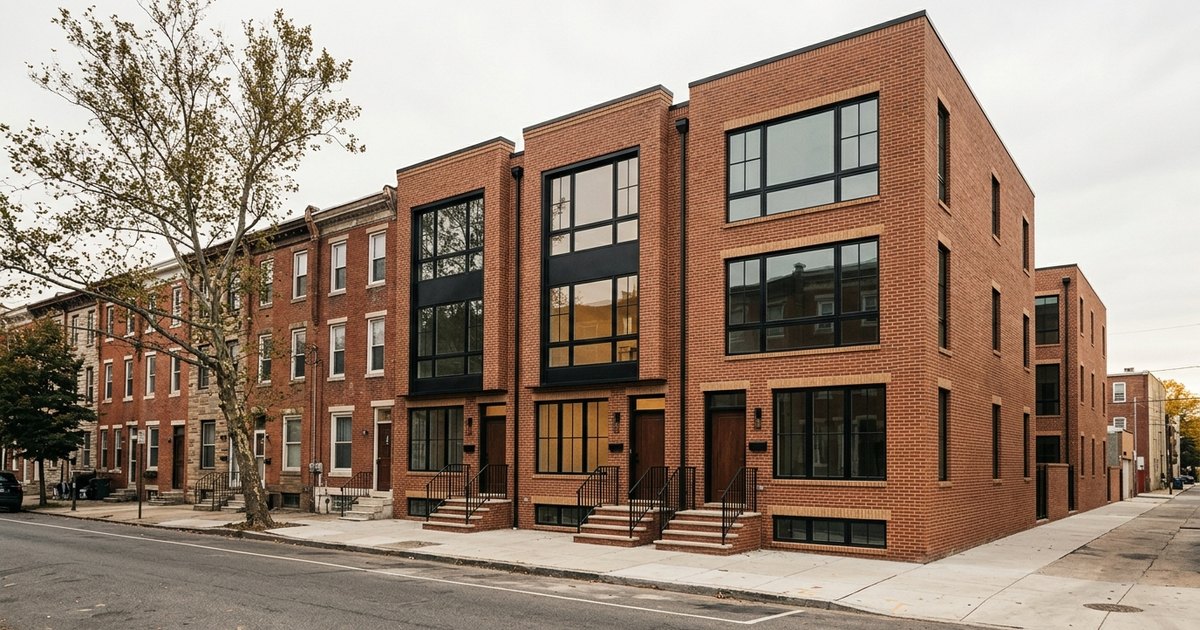
If you are looking at a new build or a gut rehab in Philadelphia, the listing probably says "tax abatement" somewhere near the top. That phrase meant one thing before 2022 and something different now, and the difference shows up in your tax bill every year you own the house.
How does the Philadelphia tax abatement work?
The Philadelphia tax abatement removes some or all of the value of new construction or qualifying improvements from your real estate tax for a set period. For new residential construction applied for after December 31, 2021, the abatement lasts 10 years, but the abated share of the building value drops 10 percent each year.
There are a few residential programs, and they are easy to mix up. The City's abatement page lists these:
- Residential new construction (Ordinance 1456-A). A 10-year abatement for newly built residential property. Not available for hotels. The builder or developer applies within 60 days of the date the building permit is issued.
- Residential improvement (Ordinance 961). A 10-year abatement for improvements to existing residential property. The application is due by December 31 of the year the building permit is issued, and the abatement starts January 1 after the owner certifies the improvements are complete.
- Improvements to unoccupied residential property (State Act 175). A 30-month abatement that starts the first day of the month after the L&I building permit is issued.
The application is filed with the Office of Property Assessment. One detail matters for buyers: OPA's application says purchasers of newly constructed homes are not the applicant. The builder files it. Your job is to confirm it was approved and know the dates.
Looking at a new build?
The builder's sales agent works for the builder. I represent you, from the first model visit through the final walkthrough.
What changed with the Philadelphia tax abatement in 2022?
The big change took effect for applications filed after December 31, 2021. Before that, new residential construction got 100 percent of the improvement value abated for 10 years. After that date, new residential construction gets a declining abatement: 100 percent in year one, dropping 10 percent each year to 10 percent in year ten.
The City's 2021 fact sheet laid out the change and the dates:
| Applied with OPA | Residential new construction | Commercial and industrial construction | Residential rehab |
|---|---|---|---|
| On or before December 31, 2021 | 100 percent of improvement value abated for 10 years | 100 percent of improvement value abated for 10 years | Schedule unchanged |
| After December 31, 2021 | Declining: 100 percent in year 1 down to 10 percent in year 10 | 90 percent of improvement value abated for 10 years | Schedule unchanged |
That fact sheet also set out the key dates. It recommended filing building permit applications by October 1, 2021, because a building permit from L&I was required before applying to OPA, and December 31, 2021 was the last day to apply under the old schedule.
Why this matters if you are buying now: a home that is still inside a pre-2022 abatement can have a very different tax bill from a newer home on the declining schedule, even at the same assessment. Do not assume two "abated" homes are taxed the same way.
What is the declining abatement schedule year by year?
Under the current schedule, year one abates 100 percent of the building value, year two 90 percent, and so on down 10 percent a year until year ten abates 10 percent. A "year" is the first 12 months of the abatement, not a calendar year. In year eleven, the full assessment is taxable.
This is the chart from OPA's new construction application, revised February 2024:
| Abatement year | Building value abated | Building value taxable |
|---|---|---|
| 1 | 100% | 0% |
| 2 | 90% | 10% |
| 3 | 80% | 20% |
| 4 | 70% | 30% |
| 5 | 60% | 40% |
| 6 | 50% | 50% |
| 7 | 40% | 60% |
| 8 | 30% | 70% |
| 9 | 20% | 80% |
| 10 | 10% | 90% |
When does year one start? OPA says the abatement starts the first month after the title date, or the first month after the project is completed and L&I issues a certificate of occupancy, whichever is later. Once the start and end dates are set, they do not change.
How much will I pay in taxes on an abated Philadelphia home?
You pay real estate tax on the land value plus the taxable share of the building value for that abatement year, at the City's current rate. The City lists a combined rate of 1.3998 percent for the 2025 tax year. Your bill goes up each year as the abated share steps down, before any change in assessment or rate.
Here is a hypothetical, using made-up assessment numbers, to show the math. Say a new rowhome in South Philadelphia is assessed at $400,000: $60,000 land and $340,000 building. At 1.3998 percent:
- Year 1: building is 100 percent abated. Taxable value is the $60,000 land. Tax is $60,000 x 0.013998 = about $840.
- Year 3: 20 percent of the building is taxable, $68,000, plus $60,000 land, so $128,000. Tax is about $1,792.
- Year 5: 40 percent of the building, $136,000, plus land is $196,000. Tax is about $2,744.
- Year 10: 90 percent of the building, $306,000, plus land is $366,000. Tax is about $5,123.
- Year 11: the full $400,000 is taxable. Tax is about $5,599.
That is the number I want buyers to budget for: not year one, but the year the abatement ends. Assessments get updated and rates change, so the real figures could move in either direction. Confirm the current rate and the property's assessment with the City, and talk to a tax professional about your own situation. My guide to Philadelphia property tax covers how assessments and bills work in more detail.
Can I get the Homestead Exemption with a tax abatement?
No. The City says properties with a 10-year residential tax abatement are not eligible for the Homestead Exemption. You can apply for the Homestead Exemption after the abatement expires. Starting in 2025, the City says the Homestead Exemption reduces the taxable portion of an owner-occupied home's assessment by $100,000.
That creates a real comparison when you are choosing between homes. Late in an abatement, the abatement may be worth less than the Homestead Exemption would be. Once the abatement ends, apply for Homestead right away if you live in the home. My post on the Philadelphia Homestead Exemption walks through how to apply.
What else should buyers and builders know?
Check three things: that the abatement was approved and when it starts and ends, whether the builder kept the property in good standing with the City, and what other City charges apply. OPA says applicants must stay in good standing on all payments to the City, and the City separately charges a Development Impact Tax on many abated projects.
A few specifics from the City's pages:
- Development Impact Tax. The City's Department of Revenue charges 1 percent of construction or improvement costs. Every entity that applies for a building permit for residential new construction over $15,000 must pay it, and owners making residential improvements over $15,000 must pay if they are eligible for an abatement. It falls on whoever applies for the building permit, which on a new build is usually the builder. Ask whether the contract passes any of it through to you.
- Separate application for each parcel. OPA requires one application per parcel and per end use, filed on time, with the building permit attached.
- Canceling is permanent. The City says once an abatement is removed, it cannot be reinstated.
If you are shopping new construction in the city, I will pull the abatement status and remaining years before you make an offer, and I represent the buyer, not the builder. Browse current inventory on my new construction page.
Want a straight answer on your situation?
First conversation is about twenty minutes and costs nothing. Call, text, or send a note.
Is the Philadelphia tax abatement still worth it?
For most buyers of new construction in Philadelphia, yes, the abatement still meaningfully lowers taxes in the early years. But the declining schedule means the savings shrink every year, so it should not be the main reason you buy. Budget for the full tax bill at the end of the abatement.
Program rules can change by City ordinance, and the dates and percentages here come from the City's published materials as of October 2026. Confirm the current rules and the specific property's abatement with the Office of Property Assessment before you rely on them. The first conversation with me is about twenty minutes and costs nothing.
Frequently asked questions
What is an abatement on my taxes?
How do I find out if a Philadelphia home has an abatement?
Can I get the Homestead Exemption and the tax abatement at the same time?
Does the tax abatement transfer to a new owner?
Sources
- City of Philadelphia, Get a property tax abatement (opens in a new tab)
- City of Philadelphia, Office of Property Assessment, Application for new construction residential abatement (revised 02/2024) (opens in a new tab)
- City of Philadelphia, 2021 Tax Abatement Timeline Fact Sheet (opens in a new tab)
- City of Philadelphia, Real Estate Tax (opens in a new tab)
- City of Philadelphia, Development Impact Tax (opens in a new tab)
This article is general information, not legal, tax, or financial advice. Rates, programs and rules change; confirm current figures with the official source, your attorney, tax professional, or lender. Published . Last updated .