Philadelphia Property Tax: Rates, Bills and How to Lower Yours

Quick answer
Philadelphia property tax is 1.3998% of a property's assessed value for the 2025 tax year, per the City's Department of Revenue: 0.6159% for the City and 0.7839% for the School District. Bills usually go out in December and are due March 31. Owner occupants can lower the bill with the Homestead Exemption and other relief programs.
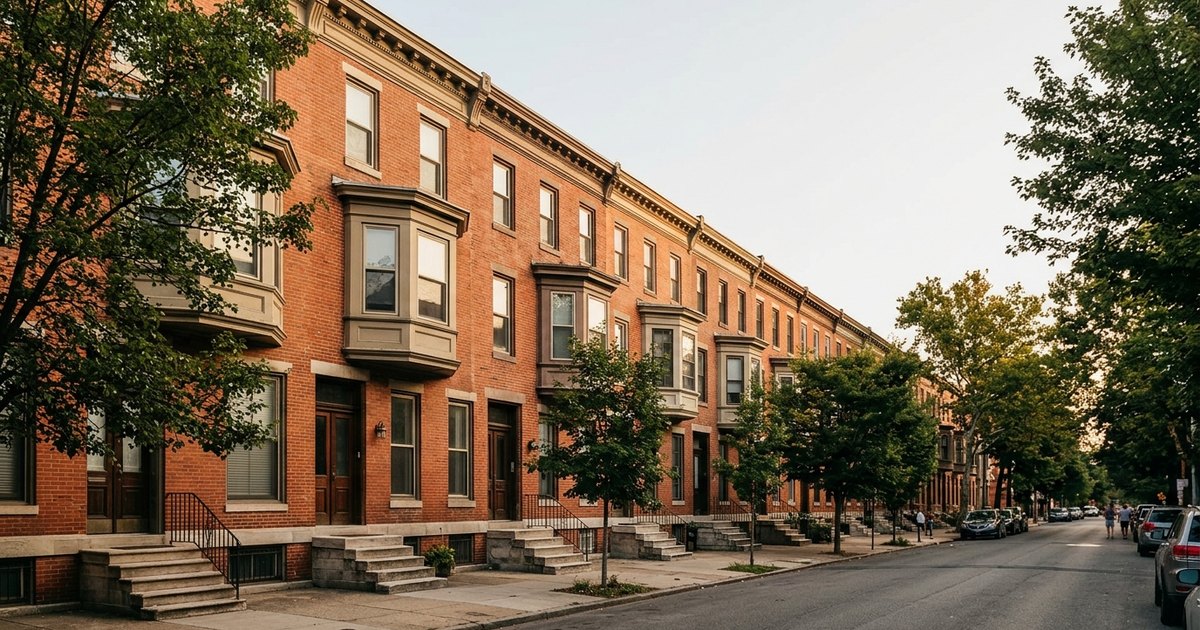
If you are buying in Philadelphia, the property tax on a house can swing your monthly payment by a few hundred dollars, and two rowhomes on the same block can carry very different bills. Here is how the tax works, how to check it on any address, and what you can do to lower it.
How much is Philadelphia property tax?
Philadelphia property tax, officially the Real Estate Tax, is 1.3998% of a property's assessed value for the 2025 tax year, according to the City's Department of Revenue. That total is two pieces: 0.6159% goes to the City and 0.7839% goes to the School District of Philadelphia. The rate can change, so confirm the current year on phila.gov.
The rate is the easy part. The number that moves your bill is the assessed value, which the Office of Property Assessment (OPA) sets for every property in the city. Subtract any exemption you qualify for from that value, multiply what is left by the rate, and you have the bill.
Here is the math on a hypothetical $300,000 assessed rowhome in South Philadelphia:
| Scenario | Taxable value | Rate | Annual tax |
|---|---|---|---|
| No exemptions | $300,000 | 1.3998% | $4,199.40 |
| With Homestead Exemption | $200,000 | 1.3998% | $2,799.60 |
| Difference | $1,399.80 |
That last line is why I bring up the Homestead Exemption with every buyer who plans to live in the house. The City says most homeowners save up to $1,399 a year with it starting in 2025.
Buying in Greater Philadelphia?
Tell me your price range and timeline. I will walk you through the real numbers for the houses you are looking at, taxes and closing costs included.
How is the Philadelphia property tax bill calculated?
Your bill equals the OPA assessed value, minus any exemption, times the combined City and School District rate. The assessment is supposed to reflect what the property is worth. If the assessment goes up, your bill goes up even if the rate stays flat, which is why buyers should look at the assessment history and not just the current bill.
A few things trip people up:
- The seller's bill is not your bill. The current owner may have the Homestead Exemption, a senior freeze, or an abatement. Those can drop off at sale. A buyer who budgets off the seller's number can be surprised the next December.
- Abatements expire. A newer or heavily renovated house may have a 10 year abatement on part of its value. When it ends, the full assessment is taxed. I cover that in the guide to the Philadelphia tax abatement.
- The purchase price does not reset the assessment. OPA sets values on its own schedule. What you pay is not automatically what you are taxed on.
Because I came from the construction side, I also look at what a planned rehab could do to a future assessment. A gut renovation that adds a bedroom and a finished basement is the kind of change that can show up in a later value.
When is Philadelphia property tax due?
Philadelphia Real Estate Tax is due March 31 each year. The Department of Revenue usually mails bills in December. If you have a mortgage with an escrow account, your lender pays the bill from that account and builds the cost into your monthly payment. If you pay on your own, the date is on you.
Late payment gets expensive quickly. The City says unpaid tax accrues charges at 1.5% per month starting April 1, and if it is still unpaid on January 1, a maximum 15% addition applies, liens are filed, and the property can head toward sheriff sale.
If a lump sum in March is hard, the City offers an installment plan that lets qualified homeowners pay current year taxes in up to twelve monthly payments through December 31, and an owner occupied payment agreement (OOPA) for past due taxes.
How do I look up property taxes on a Philadelphia address?
Use the City's property search at property.phila.gov to look up any address or OPA account number. It shows the assessed value, sales history, and physical characteristics on file. To see an actual balance owed or print a payment voucher, use the Philadelphia Tax Center. I check both on every house before we write an offer.
Here is the order I run it in:
- Search the address on property.phila.gov. Note the current market value and the taxable portions of land and improvements.
- Check for exemptions and abatements on file. If the seller has a Homestead Exemption or an abatement, figure out whether it stays with the property or leaves with the seller.
- Check the Philadelphia Tax Center for any balance. Unpaid taxes should be cleared at settlement, but you want to know early.
- Recalculate the bill for your situation. Take the assessed value, subtract $100,000 if you will apply for Homestead, and multiply by the current rate.
- Give that number to your lender. Your escrow estimate should use your bill, not the seller's.
If you are still looking, run this check on anything that makes your shortlist.
What property tax relief programs does Philadelphia offer?
Philadelphia offers several Real Estate Tax relief programs for owner occupied homes, including the Homestead Exemption, senior and low income tax freezes, the Longtime Owner Occupants Program (LOOP), a tax deferral program, an installment plan, and an Active Duty Tax Credit. Eligibility rules and income limits differ by program and can change each year.
| Program | What it does, per phila.gov | Who it is for |
|---|---|---|
| Homestead Exemption | Reduces assessed value by $100,000 | Owners who live in the home as a primary residence |
| Senior and low income freezes | Keeps the tax bill from increasing | Income eligible owners and seniors |
| LOOP | Discounts the bill after a large assessment increase | Longtime owner occupants who meet income rules |
| Deferral program | Postpones payment on increases of 15% or more | Owners hit by a big increase |
| Installment plan | Monthly payments on the current year | Qualified homeowners |
| Active Duty Tax Credit | Credit on the City portion of the bill (not the School District portion) | Reserve and National Guard members who own and live in the home and are called to active duty outside PA |
For most buyers, Homestead is the one that matters on day one. It is free, you apply once, and you do not reapply unless your deed changes. The full walkthrough is in my guide to the Philadelphia Homestead Exemption.
Can I appeal my Philadelphia property assessment?
Yes. If you think OPA's value is wrong, you can ask for a review or file an appeal with the Board of Revision of Taxes. The City says appeals are due by the first Monday in October of the year before the tax year you are appealing. Miss that date and you wait a year.
An appeal is about value, not about the bill feeling too high. You need evidence: recent closed sales of comparable homes, or proof of condition problems the assessment ignores. That is the same kind of data I use for a home valuation, built from Bright MLS closed sales. I can pull comps, but I am not a tax attorney, so for a formal appeal you may want one.
Are property taxes the same as personal property taxes?
No. Philadelphia's Real Estate Tax is a tax on real estate, meaning land and buildings, billed to the owner of record. Personal property taxes, in places that have them, apply to movable things like vehicles or equipment. When buyers here ask about property tax, the Real Estate Tax is the one that hits the budget.
Philadelphia does have other taxes you will hear about, like the Wage Tax and the Realty Transfer Tax you pay at settlement. Those are separate from the annual Real Estate Tax. The transfer tax is a one time cost, and I break it down with the rest of your settlement costs in the guide to closing costs in PA.
Want a straight answer on your situation?
First conversation is about twenty minutes and costs nothing. Call, text, or send a note.
The bottom line on Philadelphia property tax
Philadelphia property tax is a simple formula: assessed value, minus exemptions, times 1.3998% for the 2025 tax year. The work is checking the assessment, knowing which exemptions leave with the seller, and applying for Homestead once you move in. Confirm the current rate with the City and ask a tax professional before you appeal.
Frequently asked questions
Is Philly property tax high?
Can I look up property taxes in Philadelphia by address?
What happens if you do not pay Philadelphia property tax by March 31?
Can veterans in Pennsylvania get a property tax exemption?
Sources
This article is general information, not legal, tax, or financial advice. Rates, programs and rules change; confirm current figures with the official source, your attorney, tax professional, or lender. Published . Last updated .