Sell My House Fast in Philadelphia: Cash Offer vs. Listing, With the Math

Quick answer
To sell a house fast in Philadelphia, you can take a cash offer from an investor, which can close in a few weeks as-is, or list it priced off recent closed sales. Cash is faster and simpler but usually pays less. Compare the net of each route after repairs, carrying costs, commission, and the 4.578% Philadelphia transfer tax.
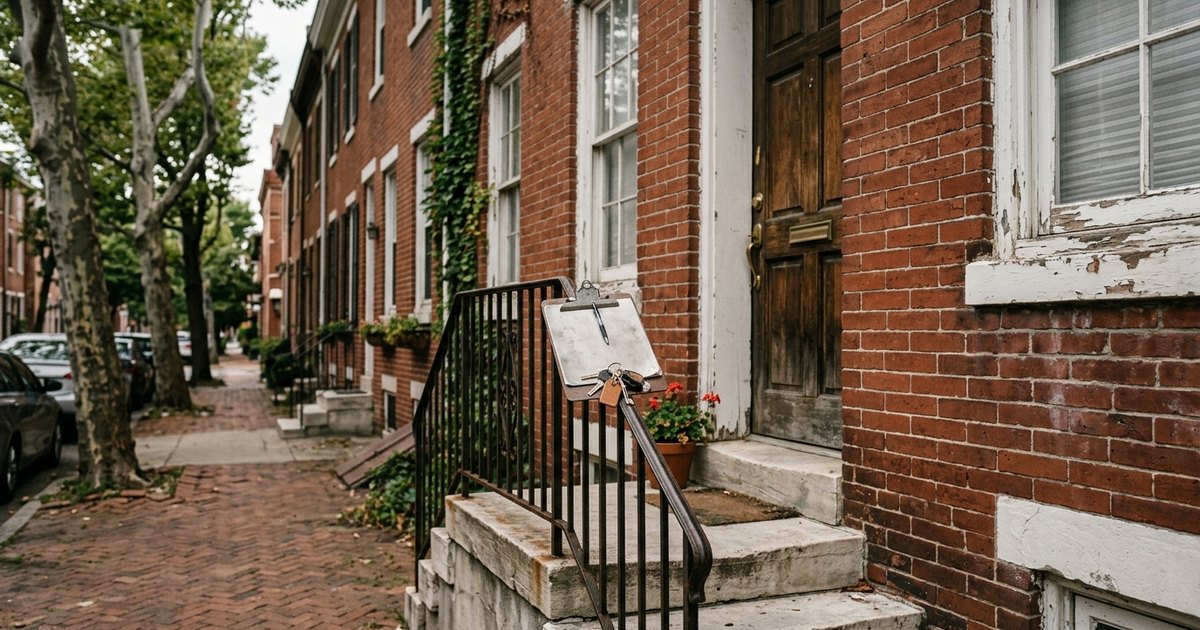
If you need to sell a Philadelphia house quickly, because of a job move, an inherited property, a house that needs more work than you want to take on, or bills that will not wait, you have two real options. Most "we buy houses" pitches only show you one number. Here is how to see both, with the math.
How can I sell my house fast in Philadelphia?
You can sell a house fast in Philadelphia by taking a cash offer from an investor buyer, which can often close in a few weeks with no repairs or showings, or by listing it priced to sell off recent closed sales. Cash buys you speed and certainty. Listing usually nets more, but takes prep and more time.
The fast routes, roughly from fastest to slowest:
- Cash offer, as-is. An investor buys the house in its current condition, often with a closing date you choose. No repairs, no cleaning, no showings, no lender.
- Listing priced to move. You list on Bright MLS at a price set off closed sales from a comparative market analysis, with light prep, and aim for strong buyer interest early.
- Full prep, then list. You repair, paint, stage, and list. Usually the highest price, and usually the longest timeline.
None of these is right for everybody. Which one wins depends on your house, your timeline, and how much work it needs, and you cannot know that until you put the numbers next to each other.
Thinking about selling?
I will run a real comparative market analysis from Bright MLS closed sales and show you your net, not just a price.
How does a cash offer compare to listing a house?
A cash offer trades price for speed and certainty. The buyer takes on the repairs, the carrying cost, and the risk, so the offer comes in below what a retail buyer would pay. A listed sale exposes the house to every qualified buyer, which is what pushes price up, but it takes prep, showings, and a buyer's financing.
| Cash offer | Listed sale | |
|---|---|---|
| Typical price | Below retail | Market price for the condition |
| Repairs and cleanout | None, sold as-is | Usually some, plus cleaning |
| Showings | None or one walkthrough | Multiple showings, possibly open houses |
| Time to close | Often a few weeks, your choice of date | Usually weeks on market plus a financing period |
| Appraisal and financing risk | None | Buyer's loan and appraisal can delay or end the deal |
| Commission | Usually none on a direct sale | Negotiated in the listing agreement |
| Transfer tax and settlement costs | Still apply | Still apply |
| Seller disclosure statement | Still required in most cases | Required in most cases |
The last two rows surprise people. Going the cash route does not make the transfer tax or Pennsylvania's disclosure law go away.
What does each route actually net? A worked example
The only number that matters is what you walk away with. Here is a hypothetical $250,000 rowhome in Kensington that needs paint, a cleanout, and some minor repairs. These numbers are made up for illustration: your commission, offer, repair costs, and transfer tax split will be different, and every line is negotiable or depends on your house.
Assumptions for both routes: the seller pays half of the 4.578% Philadelphia and Pennsylvania transfer tax, or 2.289% of the price, and other seller settlement costs are estimated.
| Line item | Cash offer, as-is | Listed after light prep |
|---|---|---|
| Sale price | $200,000 | $250,000 |
| Repairs, paint, cleanout | $0 | $8,000 |
| Commission (hypothetical 5% on the listing) | $0 | $12,500 |
| Seller's half of transfer tax (2.289%) | $4,578 | $5,722.50 |
| Other settlement costs (estimate) | $1,500 | $2,500 |
| Carrying costs: taxes, insurance, utilities | $700 (1 month) | $2,100 (3 months) |
| Estimated net to seller | $193,222 | $219,177.50 |
The math on the listed side: $250,000 minus $8,000, $12,500, $5,722.50, $2,500, and $2,100 equals $219,177.50. On the cash side: $200,000 minus $4,578, $1,500, and $700 equals $193,222.
In this example, listing nets about $25,955 more. For a house that just needs paint and a cleanout, that is the pattern I expect, and I will tell you so even though it is slower.
When does a cash offer make sense?
A cash offer makes the most sense when the house needs major work, when your deadline is real and short, or when the repair and carrying costs eat most of the gap between the two prices. Once you price the repairs honestly, a house that needs a roof and a gut kitchen can net close to the same either way.
Run the same comparison on a hypothetical rowhome in Frankford that needs a roof and a full kitchen. Suppose the work costs $45,000, takes months, and the house would list at $260,000 afterward, while an investor offers $185,000 as-is:
| Line item | Cash offer, as-is | Repair, then list |
|---|---|---|
| Sale price | $185,000 | $260,000 |
| Repairs | $0 | $45,000 |
| Commission (hypothetical 5%) | $0 | $13,000 |
| Seller's half of transfer tax (2.289%) | $4,234.65 | $5,951.40 |
| Other settlement costs (estimate) | $1,500 | $2,500 |
| Carrying costs | $700 (1 month) | $4,200 (6 months) |
| Estimated net to seller | $178,565.35 | $189,348.60 |
Listing still nets about $10,783 more on paper, but now you are fronting $45,000, managing contractors for months, and carrying the risk that the job runs over or the market shifts. For a lot of sellers, that gap is worth giving up. Coming from the construction side, I can usually tell you whether a repair estimate is realistic, which is the number this whole decision hangs on.
A cash sale also tends to make sense for:
- Inherited houses you do not want to manage from a distance
- Houses with tenants, code issues, or damage that a lender may not finance
- A deadline that a financed buyer's timeline cannot meet
What costs come out of either sale in Philadelphia?
Every Philadelphia sale carries realty transfer tax and settlement costs, and a listed sale usually adds commission and prep. As of July 1, 2025, the combined transfer tax rate in Philadelphia is 4.578%: 3.578% for the City plus 1% for the Commonwealth, according to the City of Philadelphia. Confirm the current rate before you settle.
A few things to know about the transfer tax:
- Who pays is negotiated. The Pennsylvania Department of Revenue says both grantor and grantee are held jointly and severally liable for the tax. How the cost is split between buyer and seller is set in your agreement of sale, so read that line in any cash offer.
- It applies to cash sales too. A lower price means a lower tax, but the tax does not disappear because there is no lender.
- Rates change. The City's portion was raised in 2025. My guide to the Philadelphia transfer tax covers it in more detail.
Commission on a listed sale is negotiable and is written into the listing agreement before you sign. For tax questions about your proceeds, talk to a CPA or tax professional.
Do you still need a disclosure statement if you sell as-is?
In most cases, yes. Pennsylvania's Real Estate Seller Disclosure Law applies to all residential real estate transfers except specific exceptions, such as certain fiduciary transfers in an estate and qualifying new construction. Selling as-is to a cash buyer is not one of the listed exceptions, so known material defects still go on the form.
"As-is" means you are not making repairs. It does not mean you can stay quiet about a known problem. If the house is part of an estate, the fiduciary exception may apply, so ask a real estate attorney how the law fits your sale.
How do you vet a cash buyer in Philadelphia?
Vet a cash buyer by asking for proof of funds, a written offer with a firm closing date, a real earnest money deposit held by a title company, and a short inspection period. Read every contingency and ask whether the buyer can assign the contract to someone else. Then compare their net against a listed sale.
Before you sign with any buyer:
- Ask for proof of funds dated recently, in the buyer's name or the name on the contract.
- Get the offer in writing with the price, closing date, and who pays which costs.
- Confirm the earnest money amount and that a title company or attorney holds it.
- Check the inspection or due diligence period. A long one can let a buyer back out or renegotiate late.
- Ask about assignment. Some contracts let the buyer sell the contract to another investor before closing. Whether that is allowed depends on the contract, so have your attorney read it and know who will actually close.
- Pick your own title company if you can, or at least confirm the one named is real and licensed.
- Get a net sheet for both routes before you decide.
That last step is the point of my cash offer comparison. I put a cash offer and what the same house would likely net listed side by side, with the math shown, and it costs you nothing to see both. Asking for the numbers does not commit you to sell at all.
Want a straight answer on your situation?
First conversation is about twenty minutes and costs nothing. Call, text, or send a note.
The bottom line on selling a house fast
Selling fast in Philadelphia is a trade: a cash offer buys speed and certainty, and listing usually buys a higher net. The right choice depends on the condition, your deadline, and honest repair numbers. Get both numbers in writing, read the transfer tax split and every contingency, and pick the route that leaves you more money.
Frequently asked questions
What can I do to get my house to sell faster on the market?
Are real estate prices dropping in Philadelphia?
What not to do before you sell your house?
How fast can a cash buyer close on a house in Philadelphia?
Sources
This article is general information, not legal, tax, or financial advice. Rates, programs and rules change; confirm current figures with the official source, your attorney, tax professional, or lender. Published . Last updated .