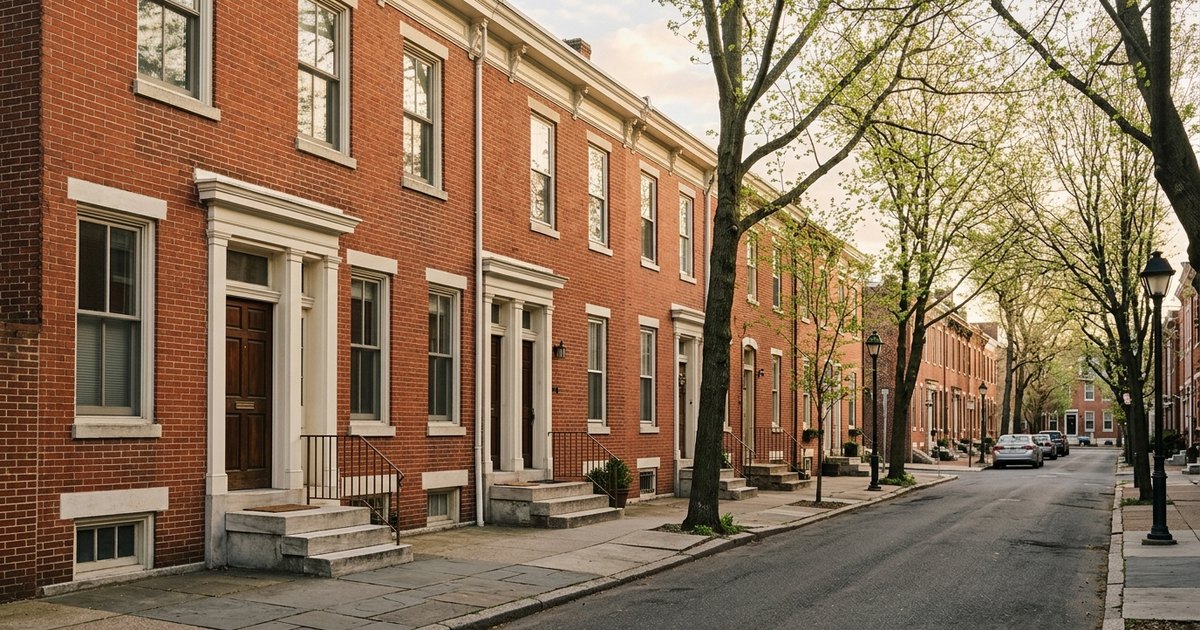
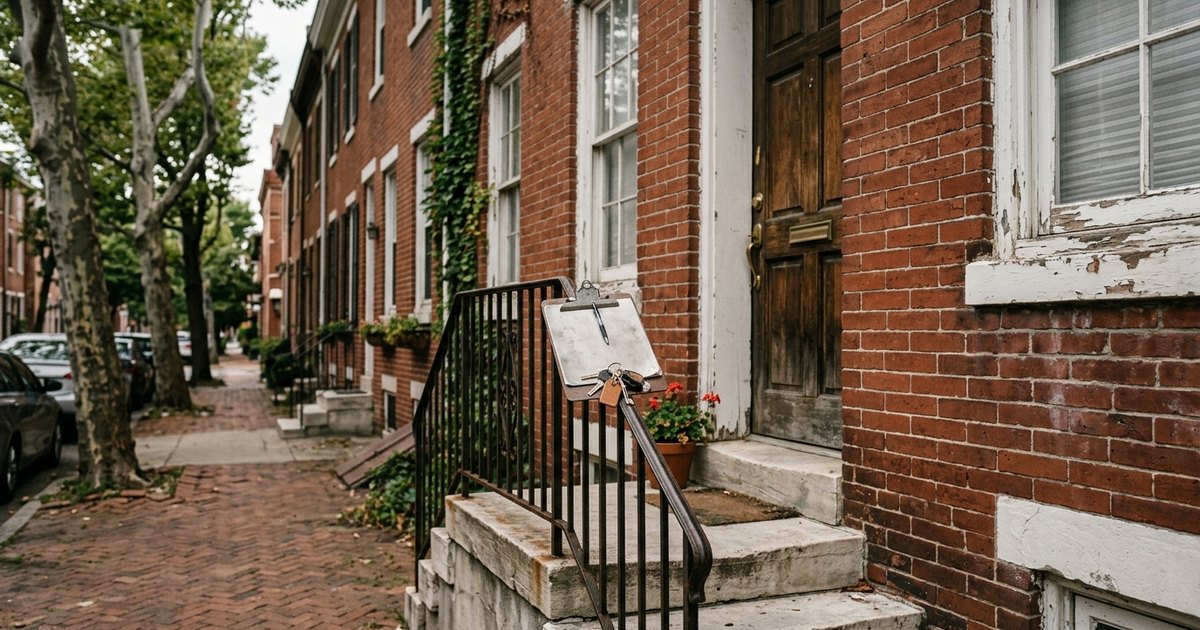
How to Prepare Your House for Sale in PA: A Philadelphia Seller's Checklist

Quick answer
To prepare a house for sale, get a price from recent closed sales, fix what a buyer's inspector will flag, paint and deep clean, declutter and stage the main rooms, and take strong photos. In Pennsylvania, most sellers must also give buyers a signed Seller Property Disclosure Statement before an agreement of sale is signed.
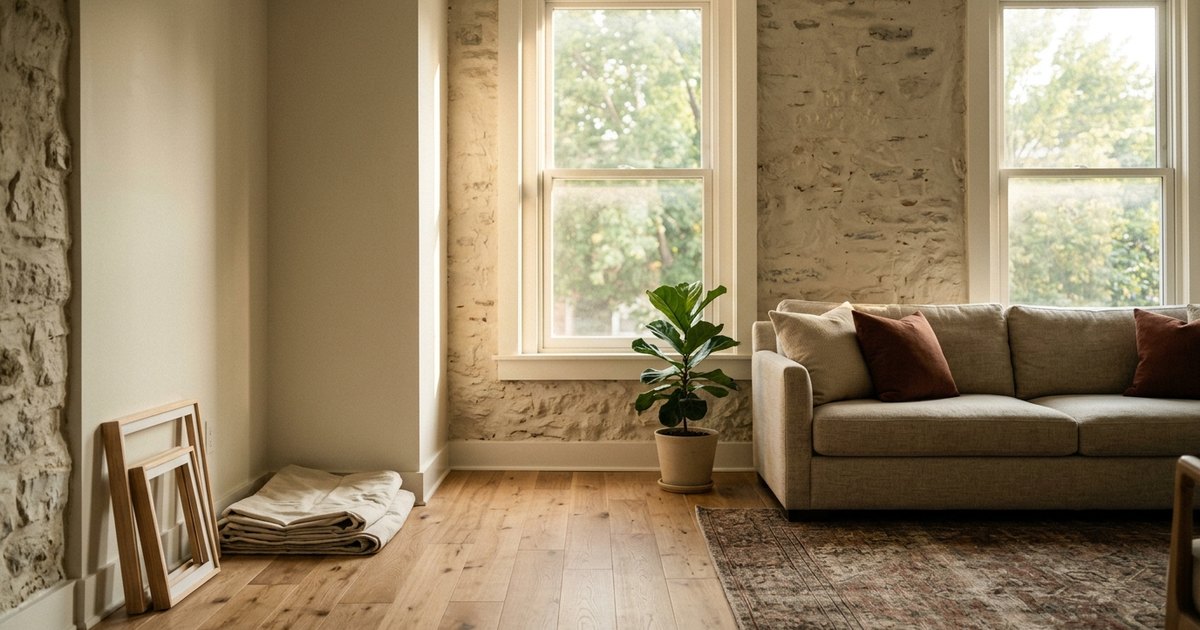
If you are getting ready to sell, the hard part is not the to-do list, it is knowing which items on it are worth your money. I came to real estate from the construction side, so this guide is built around that question: what to fix, what to leave alone, and what Pennsylvania requires you to put in writing.
How do you prepare your house for sale?
You prepare a house for sale by pricing it first, then fixing what a buyer's inspector will flag, painting and deep cleaning, decluttering and staging the main rooms, and getting strong photos. In Pennsylvania, you also complete the Seller Property Disclosure Statement before an agreement of sale is signed. That order keeps your money where it counts.
Here is the order I walk sellers through:
- Get a real price first. A comparative market analysis built from closed sales tells you what the house is worth as it sits, which tells you how much prep makes sense.
- Walk the house like an inspector. Look at the roof, gutters and downspouts, basement walls, the water heater, the electrical panel, and any visible plumbing.
- Fix function before finishes. Leaks, drafty doors, broken outlets, stuck windows, and running toilets come before anything cosmetic.
- Paint and patch. Neutral, fresh paint is one of the cheapest ways to make a house photograph well.
- Declutter and deep clean. Pack up a third of what is in each closet and on each counter. Clean like a buyer is going to open every cabinet, because they will.
- Stage the main rooms. Focus on the living room, primary bedroom, and kitchen.
- Gather paperwork. Permits, warranties, receipts for repairs, and utility history all help.
- Complete the disclosure statement honestly and completely, with help from your agent on the form.
- Schedule photos after everything above is done, not before.
Thinking about selling?
I will run a real comparative market analysis from Bright MLS closed sales and show you your net, not just a price.
What should I do to my home before selling?
Start with paint, cleaning, and repairs that remove a buyer's objection. In NAR's 2025 Remodeling Impact Report, the projects REALTORS most often recommended sellers complete before selling were painting the entire home, painting one interior room, and new roofing. Big remodels ranked lower, because buyers rarely pay back their full cost.
Here are the top recommendations from that 2025 report, measured as the share of REALTORS surveyed who suggested each project:
| Project REALTORS recommend before selling | Share recommending it (2025) |
|---|---|
| Paint the entire home | 50% |
| Paint one interior room | 41% |
| New roofing | 37% |
| Kitchen upgrade | 30% |
| Bathroom renovation | 24% |
Source: NAR 2025 Remodeling Impact Report, released April 9, 2025.
That matches how I look at a house. Paint is cheap and changes the first impression. A roof is different: it is not cosmetic at all. A roof near the end of its life shows up on the buyer's inspection, then shows up again as a repair request or a price reduction. Kitchens and baths are where sellers overspend, because a buyer who wants a new kitchen usually wants to pick it out themselves.
Which repairs are worth it before selling?
The repairs worth doing are the ones a buyer's inspector or lender will flag: active leaks, roof problems, electrical hazards, failed mechanicals, and water in the basement. Those cost you more in negotiation than they cost to fix. Cosmetic upgrades and full remodels are rarely worth it, because buyers discount them and you rarely recover the full spend.
This is where my construction background actually earns its keep. I am looking at scope, not just finishes. A stained ceiling can be a small flashing repair or a sign of a roof that is done, and the answer changes what you should spend. Here is how I generally sort it:
| Usually worth fixing before listing | Usually better handled through price |
|---|---|
| Active roof or plumbing leaks | Dated but working kitchen cabinets |
| Water in the basement, failed gutters or downspouts | Older but functioning bathroom tile |
| Double-tapped or overloaded electrical panel issues | Carpet over hardwood you have not refinished |
| A water heater or boiler that has failed | Paint colors in closets and basements |
| Broken windows, doors that do not latch | Light fixtures that work but are not your style |
| Peeling paint, missing handrails, loose steps | A full kitchen or bath remodel |
A worked example, using hypothetical numbers. Say you have a rowhome in Northeast Philadelphia that comparable sales suggest is worth about $260,000 in good condition, and it has two issues: a slow leak at the back roof and dated kitchen cabinets.
- Fixing the roof leak and the ceiling stain might cost a few thousand dollars. Leave it, and a buyer's inspector will find it, and the repair request or price cut often lands higher than the real fix because nobody knows the scope yet.
- Now suppose a new kitchen would cost $30,000. If it lifts the price by less than that, you lost money and months.
So in that example, fix the leak, paint the kitchen walls, swap the cabinet hardware, and let the price reflect the cabinets. Get written quotes for your own house before deciding, since every scope is different.
What does Pennsylvania require sellers to disclose?
Under Pennsylvania's Real Estate Seller Disclosure Law, 68 Pa.C.S. Chapter 73, most sellers of residential property must disclose known material defects on a property disclosure statement and deliver a signed, dated copy to the buyer before the seller and buyer sign the agreement of sale. The State Real Estate Commission publishes the form.
A few points from the statute that sellers often do not know:
- What the form covers. Section 7304 requires the form to ask about the roof, basements and crawl spaces, termites and pests, structural problems, additions and remodeling, water and sewage, plumbing, heating and air conditioning, electrical, soils and drainage, hazardous substances, homeowners associations, legal and title issues, and storm water facilities.
- It even asks about you. The first required subject is the seller's own expertise in contracting, engineering, architecture, or related areas. If you did your own work, be ready to say so.
- No investigation required, but no hiding. Section 7308 says the seller does not have to make a specific investigation to complete the form, but cannot make representations they know are false or fail to disclose a known material defect.
- Updates are required. If something you disclosed becomes inaccurate before settlement, you must tell the buyer.
- Exceptions exist. Chapter 73 excludes some transfers, including certain estate and trust transfers by a fiduciary and qualifying never-occupied new construction with a one-year or longer warranty, a code inspection, and a certificate of occupancy. Condo and co-op sellers disclose only for their own unit.
- Liability is real. Under Section 7311, a person who willfully or negligently fails to comply can be liable for the buyer's actual damages, and an action must be filed within two years after final settlement.
This is a summary of how the law generally works, not legal advice. If you are unsure how to answer something on the form, ask a real estate attorney before you sign it.
Should you get a pre-listing inspection?
On an older Philadelphia house, a pre-listing inspection is often worth it because it shows you what the buyer's inspector will find before you set a price. You can then fix the issue, price for it, or disclose it with a contractor's report attached. The tradeoff is that anything it finds becomes a known defect you must disclose.
Chapter 73 also has a provision worth knowing: Section 7309 says a seller generally is not liable for an error based on information from a home inspector or contractor about matters within their expertise, if the seller had no knowledge of the error, and that a written report delivered to the buyer can satisfy that exemption. Ask your attorney how that applies to your sale.
Is staging worth it?
Staging is usually worth it for the rooms buyers care about most. In NAR's 2025 Profile of Home Staging, 83% of buyers' agents said staging made it easier for a buyer to visualize the property as a future home. The rooms staged most often were the living room (91%), the primary bedroom (83%), and the dining room (69%).
You do not need to rent a houseful of furniture. For most occupied houses, staging means removing furniture, not adding it. Pull out the extra chairs, clear the counters, put fresh linens on the bed, and make sure every light works. Empty houses can benefit from a few key pieces, so buyers can judge room size.
What is the most common reason a house fails to sell?
The most common reason is price. A house priced above what recent closed sales support sits, collects price cuts, and starts to look like something is wrong with it. Condition and photos matter, but even a perfectly prepared house will not sell if the number is off. Price off closed sales, not off asking prices or online estimates.
That is why step one on the list above is a price, not a paint color. My home valuation is a real comparative market analysis built from Bright MLS closed sales, not an automated estimate, and I will walk through it with you before you spend a dollar on prep. Timing matters too, and my guide on the best time to sell a house in Philadelphia covers the seasonal data.
Want a straight answer on your situation?
First conversation is about twenty minutes and costs nothing. Call, text, or send a note.
The bottom line on getting a house ready to sell
Price it first, fix what an inspector will flag, paint, clean, declutter, and stage the main rooms. Skip the big remodel unless the numbers clearly support it. Complete Pennsylvania's Seller Property Disclosure Statement honestly and on time, and get a real estate attorney's help with anything on it you are unsure about.
Frequently asked questions
What should I not fix when selling a house?
Do I have to disclose past problems that were already fixed?
How much does it cost to prepare a house for sale?
Is a pre-listing home inspection worth it?
Sources
- Pennsylvania General Assembly, 68 Pa.C.S. Chapter 73, Real Estate Seller Disclosure Law (opens in a new tab)
- Pennsylvania State Real Estate Commission, Seller's Property Disclosure Statement (PDF) (opens in a new tab)
- Pennsylvania Department of State, Real Estate Commission (opens in a new tab)
- National Association of REALTORS, 2025 Remodeling Impact Report (opens in a new tab)
- National Association of REALTORS, 2025 Profile of Home Staging (opens in a new tab)
This article is general information, not legal, tax, or financial advice. Rates, programs and rules change; confirm current figures with the official source, your attorney, tax professional, or lender. Published . Last updated .